It has all already happened to someone, before us.
The strain of deciding under pressure.
The fear of leading badly the people who depend on us.
The doubt over whether we're building something worth leaving behind.
The question of what will remain once we're gone.
None of this is our own invention.
They are chapters already lived, thought through, and told by someone who came before.
And someone left those thoughts in books so that whoever came after wouldn't have to start from zero.
The Scipionic Circle was born from a simple idea:
studying those who came before lets us fail better.
Not to avoid failing.
Better.
We don't believe wisdom can be packaged into a ranking.
"The ten books to read before you turn thirty."
"The five books that will change your life."
A book isn't worth just what it contains.
It's worth where it takes you next.
A quote leads to an author.
An author leads to an idea.
An idea leads to another book.
A book opens a question.
And that question opens another.
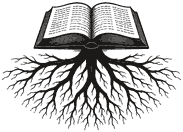
It's a rhizome.
It has no center.
No fixed path.
It spreads in every direction.
Our library works the same way.
A summary can tell you what's in a book.
It can't replace having read it.
If a book is worth it, it must be read.
In full.
With the effort, the slowness, the boredom, and the insights that reading involves.
Because understanding doesn't just mean arriving at the answer.
It means walking the path that leads to it.
Munger leading to Ferriss.
Ferriss leading to Kahneman.
Kahneman leading to Taleb.
Or maybe the other way around.
None of these paths was planned.
They were born from a quote, a footnote, a name encountered one too many times, a sentence that stuck.
An unplanned discovery isn't an accident.
It's the point.
That's why you won't find just books here.
You'll find connections.
You don't read to accumulate facts.
You read to build, page after page, a compass.
A seemingly insignificant distinction can change how we look at a decision.
A concept encountered twenty years ago can suddenly become useful tomorrow morning.
A sentence can stay silent for years before becoming a tool.
Knowledge doesn't always grow visibly.
Sometimes it settles.
Then, when it's needed, it comes back.
Learning to ride a bike.
Fixing something with your own hands.
Understanding how a machine works.
Building a website.
Learning a language.
Studying a book.
Deep down, the method is always the same:
find the right sources.
Take them apart.
Understand how they work.
Keep what's useful.
Try.
Fail.
Repeat.
The distance between not knowing and knowing is often much shorter than we imagine.
It's a gathering.
In the oldest sense of the word: a place where you sit together, bring what you've understood, and let ideas meet each other.
Without hierarchies.
Here books aren't organized only by genre, author, or date.
They're connected by what runs through them.
The concepts.
That's why you can enter through one author and leave with another.
You can arrive looking for a book and find yourself in front of a question.
You can follow an idea and end up somewhere you never meant to go.
That's how knowledge should work.
Not like a road.
Like a network.
We promise something harder.
A method for continuing to look.
Because the world changes.
Tools change.
Technologies change.
People change.
Problems change.
But some questions come back.
And sooner or later, someone has already faced them.
We want to meet them.
Listen to them.
Understand what they learned.
And then go further.
Still learning.
A door. A book. A question. A possibility.
You never truly stop learning.
And that's exactly why the work never ends.
A digital gathering for those who believe the past is not just what has been, but one of the most reliable maps for understanding what's to come.